





















































The Last Standing Article You’ll Ever Have to Read
O.K., so the headline is a little misleading — or to put it more bluntly, just plain wrong in three different ways.
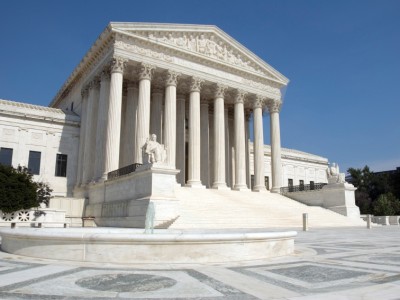
First, unless you’re a law professor or maybe a D.C. lawyers, you’ll never have to read an article about standing doctrine at all, because you’ll never need to worry about the arcane doctrine that governs when citizens can challenge government actions in federal court.
Second, if you are a law professor, you’ll be faced with an unending stream of articles about standing from now until the day you quit your job. Law professors love to write about the doctrine.
And third, “Standing on Hot Air: AEP and the Bankruptcy of Standing Doctrine” really isn’t an article at all — just a short essay for an on-line law journal. Using the Supreme Court’s ruling on public nuisance law and climate change as an example of judges’ inability to agree about how to apply the doctrine, the essay argues that standing doctrine has become so incoherent and subject to manipulation that it has lost any real function.
Of course, the fact that the headline is wrong in three different ways is hardly different from most headlines on cable news or many sound bites from politicians. So if you say that it’s false, maybe I’ll just say I was misquoted.
——–
P.S. Now that I’m done with the shameless self-promotion, I’d also like to recommend Ann Carlson’s new paper on “Designing Effective Climate Policies.” She argues:
Though policymakers may enact complementary policies for reasons other than greenhouse gas emissions reduction (renewable portfolio standards to promote job creation or air pollution reduction, for example), if the goal is solely about reducing greenhouse gases most cost-effectively cap-and-trade alone may be a better choice – with one exception. If systematic market failures prevent emitters subject to a cap-and-trade system from choosing the lowest cost compliance options, then from a climate policy perspective complementary polices to correct the market failure make sense.
This assumes, presumably, that the cap has been set at an appropriate level.
About Dan

Dan Farber has written and taught on environmental and constitutional law as well as about contracts, jurisprudence and legislation. Currently at Berkeley Law, he has al…
READ more
Reader Comments